


For Businesses:
You need to know who you're interacting with before value moves, access is granted, or communication is established. Raw identifiers don't give you that certainty. They create fraud, errors, and compliance exposure.


'/%3e%3cpath%20d='M86.9576%206.5651C86.9576%206.98487%2086.6173%207.32516%2086.1975%207.32516H80.3925C79.9727%207.32516%2079.6324%206.98487%2079.6324%206.5651V0.760057C79.6324%200.340289%2079.9727%200%2080.3925%200H86.1975C86.6173%200%2086.9576%200.340289%2086.9576%200.760057V6.5651Z'%20fill='url(%23paint1_linear_3299_19238)'/%3e%3cpath%20d='M80.4455%2028.0686C80.0258%2028.0686%2079.6855%2027.7283%2079.6855%2027.3085V21.8248C79.6855%2021.405%2079.3452%2021.0647%2078.9254%2021.0647H73.3604C72.9406%2021.0647%2072.6003%2020.7244%2072.6003%2020.3047L72.6003%2014.9116C72.6003%2014.4919%2072.26%2014.1516%2071.8403%2014.1516L66.3698%2014.1516C65.9501%2014.1516%2065.6098%2013.8113%2065.6098%2013.3915L65.6098%208.13791C65.6098%207.71814%2065.2695%207.37786%2064.8497%207.37786L59.6487%207.37786C59.229%207.37786%2058.8887%207.03757%2058.8887%206.6178L58.8887%200.812755C58.8887%200.392987%2059.229%200.0526981%2059.6487%200.0526981L65.4538%200.0526983C65.8735%200.0526983%2066.2138%200.392988%2066.2138%200.812755V6.06637C66.2138%206.48613%2066.5541%206.82642%2066.9739%206.82642H72.1749C72.5947%206.82642%2072.9349%207.16671%2072.9349%207.58648V12.9795C72.9349%2013.3993%2073.2752%2013.7396%2073.695%2013.7396H79.1654C79.5852%2013.7396%2079.9255%2014.0799%2079.9255%2014.4996V19.9834C79.9255%2020.4031%2080.2658%2020.7434%2080.6855%2020.7434H86.2506C86.6704%2020.7434%2087.0106%2021.0837%2087.0106%2021.5035V27.3085C87.0106%2027.7283%2086.6704%2028.0686%2086.2506%2028.0686H80.4455Z'%20fill='url(%23paint2_linear_3299_19238)'/%3e%3cdefs%3e%3clinearGradient%20id='paint0_linear_3299_19238'%20x1='61.0167'%20y1='-5.68245'%20x2='85.132'%20y2='33.273'%20gradientUnits='userSpaceOnUse'%3e%3cstop%20offset='0.471775'%20stop-color='white'/%3e%3cstop%20offset='1'%20stop-color='%23B0395A'/%3e%3c/linearGradient%3e%3clinearGradient%20id='paint1_linear_3299_19238'%20x1='61.0167'%20y1='-5.68245'%20x2='85.132'%20y2='33.273'%20gradientUnits='userSpaceOnUse'%3e%3cstop%20offset='0.471775'%20stop-color='white'/%3e%3cstop%20offset='1'%20stop-color='%23B0395A'/%3e%3c/linearGradient%3e%3clinearGradient%20id='paint2_linear_3299_19238'%20x1='61.0167'%20y1='-5.68245'%20x2='85.132'%20y2='33.273'%20gradientUnits='userSpaceOnUse'%3e%3cstop%20offset='0.471775'%20stop-color='white'/%3e%3cstop%20offset='1'%20stop-color='%23B0395A'/%3e%3c/linearGradient%3e%3c/defs%3e%3c/svg%3e)
IDENTITY DIRECTORY INFRASTRUCTURE
didx:proxy is a trusted addressing, consent, and routing layer that lets people and businesses be discovered, verified, and connected - without exposing sensitive details.
It works for money, communication, access, and any interaction where trust matters.
Think of it as DNS for money. Just as the Domain Name System resolves human-readable names to IP addresses, didx:proxy resolves verified identity handles to financial endpoints - compliant, fraud-resistant, and ready to work with any payment rail.
IDENTITY DIRECTORY INFRASTRUCTURE
didx:proxy is a trusted addressing, consent, and routing layer that lets people and businesses be discovered, verified, and connected - without exposing sensitive details.
It works for money, communication, access, and any interaction where trust matters.
Think of it as DNS for money. Just as the Domain Name System resolves human-readable names to IP addresses, didx:proxy resolves verified identity handles to financial endpoints - compliant, fraud-resistant, and ready to work with any payment rail.
What is didx:proxy?
Every interaction starts with the same hidden question: Who is on the other side, and can I trust them?
Today, systems answer this with fragile identifiers - account numbers, wallet addresses, phone numbers, emails. They're hard to use, easy to get wrong, and increasingly exploited by fraud.
These identifiers say where to send something, but not who you're dealing with, whether they're legitimate, or whether the interaction should even be allowed.
didx:proxy introduces a different model. It's a verified addressing layer where human-readable handles resolve to trusted endpoints, governed by identity, credentials, and consent.
You don't exchange raw details. You resolve trust.
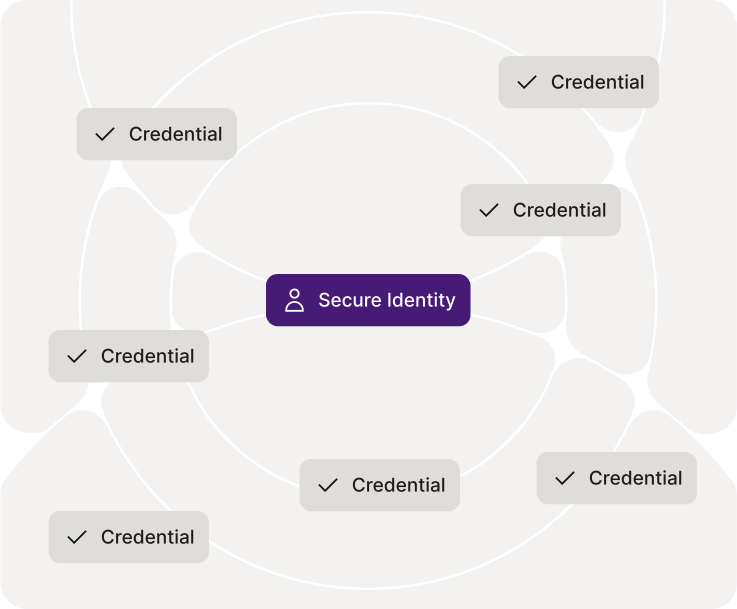
Simpler onboarding. Safer, compliant, and fraud-resistant payments. Fewer data-entry errors. A cleaner way to identify users across channels.
Handles they control - one or many - to use across apps, platforms, and services, keeping private details private.
The Core Idea
The internet solved naming for machines with DNS. Finance, commerce, and digital services still rely on raw identifiers.
didx:proxy acts as a trust-aware identity resolution layer.
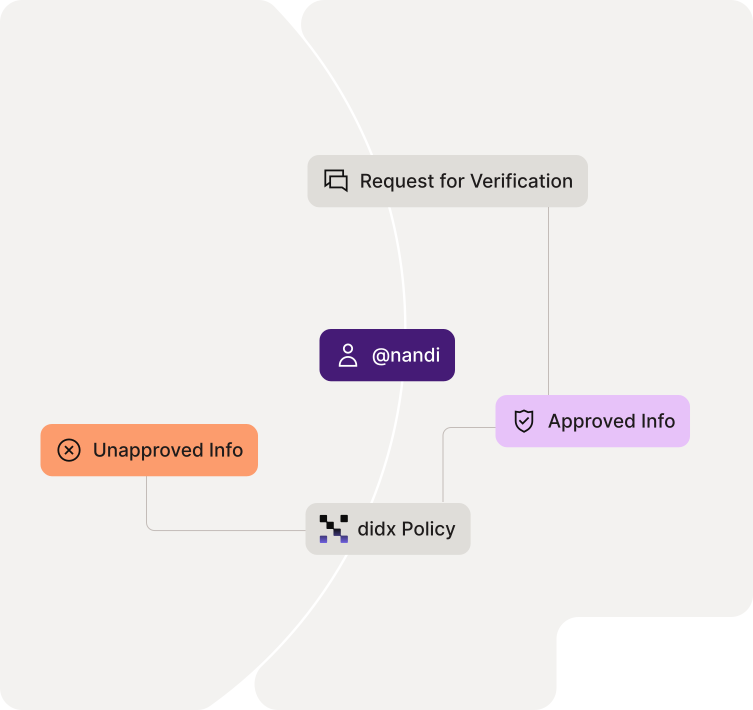
A handle like @nandi or @acme.pay doesn't point directly to data. It points to policy.
What gets returned depends on who is asking, why they're asking, and what credentials they hold.
TWO WAYS TO USE IT
You need to know who you're interacting with before value moves, access is granted, or communication is established. Raw identifiers don't give you that certainty. They create fraud, errors, and compliance exposure.
Sharing details feels risky. Once an account number or address leaks, control is gone. People want a simple way to be reachable without being exposed.
How didx:proxy Works
It's More Than Money
didx:proxy works wherever trust and routing intersect.
Route to bank accounts, wallets, stablecoins, cards, or future rails.
Resolve verified company identity, registration, or authorised representatives.
Identify users across products without duplicating onboarding.
Share verified contact endpoints without exposing raw details.
Prove authority before granting access to systems, assets, or services.
What Can a Handle Link To?
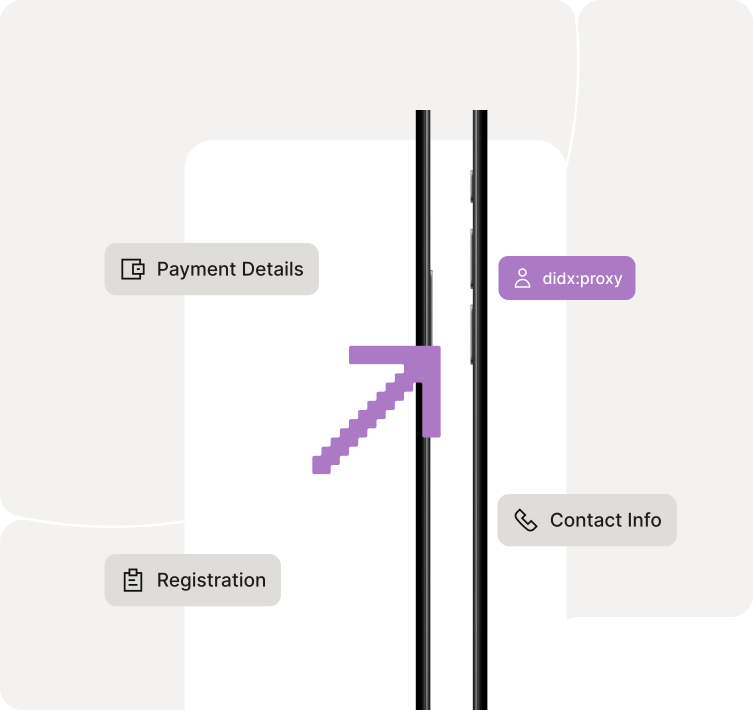
Proxy handles can map to verified identity information, payment endpoints, communication channels, or credentials - all permissioned and user-controlled.
RESULT
Not a payment alias. Not a username. Not a wallet address.
A trusted contact list for the digital economy.
You don't need to know everything about the other party. You only need to know enough to trust the interaction.

Use Cases
Alias-based payments that work with any payment rail. Replace account numbers with secure, verified handles - safer, simpler, more accurate.
Use proxy handles to identify customers across products without repeating KYC details.
Replace complex wallet addresses with verified handles. Reduce errors. Enable compliant, identity-bound transfers.
Let buyers, sellers, and gig workers interact using handles instead of exposing personal info.
Why didx:proxy?
Every handle is bound to verified identity.
Nothing resolves without explicit permission.
Different contexts return different answers.
Works with existing payment rails, identity systems, and platforms.
CBDCs, stablecoins, instant payments, and systems not yet invented.
"We built didx:proxy because we saw where the world was going: identity and finance converging. This is the addressing layer that makes that convergence possible - secure, consented, and global."
Lohan Spies
Founder, DIDx

QUESTIONS
GET STARTED
See how didx:proxy can replace scattered details with verified identity handles your users can share anywhere.


